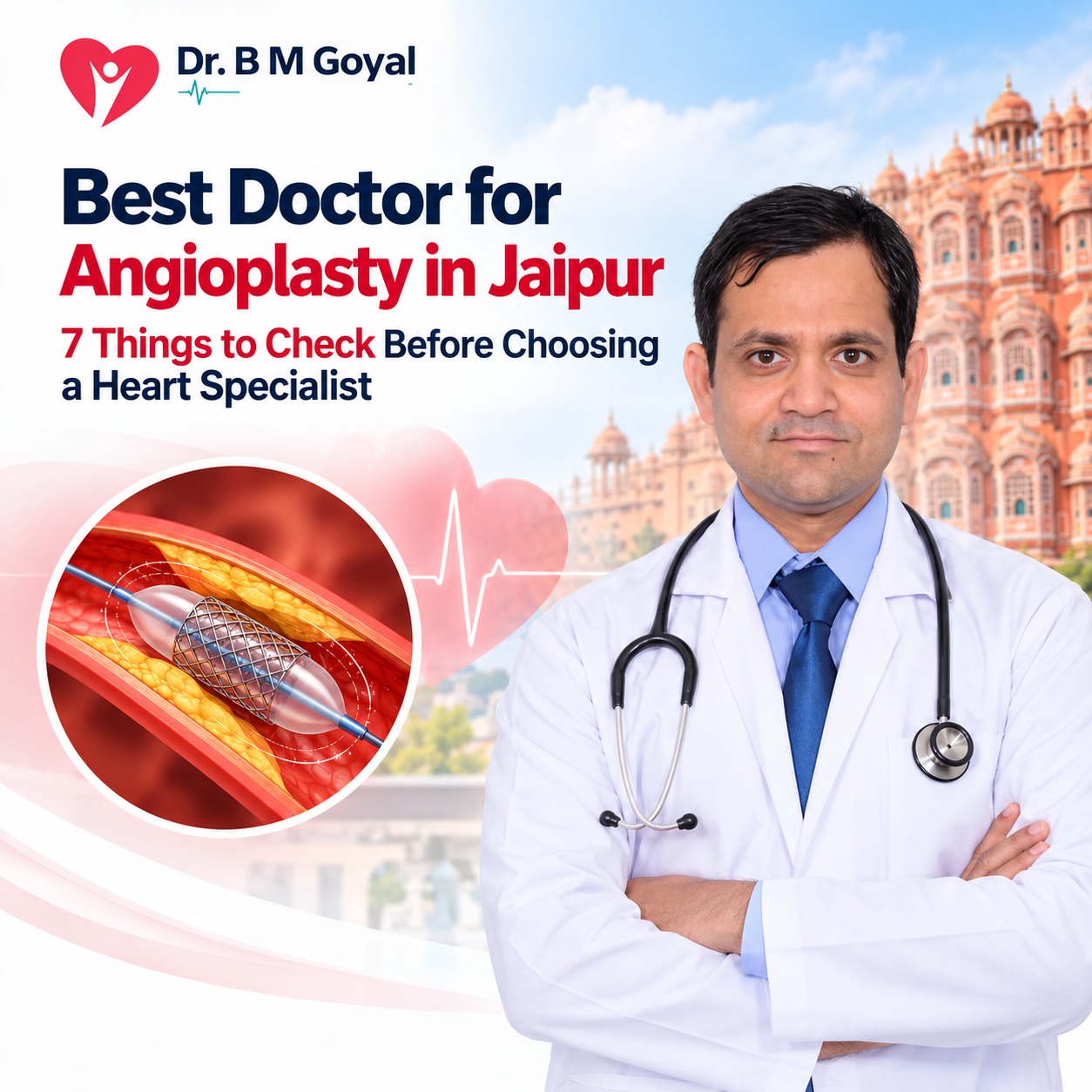
Best Doctor for Angioplasty in Jaipur 7 Things to Check Before Choosing a Heart Specialist
Selecting the Best Doctor for Angioplasty in Jaipur is a critical task if you have been diagnosed with coronary artery disease. The ideal specialist should be able to assess your condition, recommend appropriate treatment methods, inform you about possible risks, and assist in the recovery process and management of your heart health.
Angioplasty is a medical procedure that involves opening narrowed or blocked coronary arteries and increasing blood flow to the heart. Yet, it is not required by all patients with blockages. What is the most appropriate treatment option depends on the symptoms, diagnosis results, location and severity of blockages, and general health condition.
When comparing heart specialists in Jaipur, it is useful to know their qualifications, procedure experience, hospital equipment, communication skills, and follow-up services. This article describes seven critical aspects and how to talk to a cardiologist like Dr BM Goyal about them.
Why Choosing the Right Angioplasty Doctor Matters
The coronary arteries are responsible for carrying oxygen-filled blood to the heart muscle. Plaque buildup in these arteries leads to reduced blood flow to the heart muscle. The condition is referred to as coronary artery disease, and it causes pain in the chest, breathing problems, or even a heart attack in some instances. Choosing the Best Doctor for Angioplasty in Jaipur helps patients in understanding their diagnosis and treatment options.
Coronary angioplasty is a less invasive procedure whereby a thin tube is inserted by a cardiologist into the blood vessel, normally through the wrist or groin, to reach the blocked artery. A balloon is inflated to increase the diameter of the blocked artery. Stents may be used to keep the artery open.
Angioplasty can be recommended in some emergency situations and some patients with symptomatic coronary artery disease. Others can be treated with medications, lifestyle changes or coronary artery bypass surgery (CABG). The decision needs to be made on a case-by-case basis.
A competent interventional cardiologist can analyze your reports and give you all possible options. The emergency services of the hospital and the follow-up procedures also play an important role.
7 Things to Check Before Choosing an Angioplasty Specialist
1. Qualifications and Specialization in Interventional Cardiology
Make sure that the doctor is medically qualified, has cardiology training and has interventional cardiology experience. Interventional cardiology is a field where doctors use catheterization procedures to both diagnose and treat some heart problems.
Make sure that the doctor is professionally qualified and make sure that the doctor often deals with such cases. A good specialist must be able to tell you about the diagnosis, procedure, and its necessity.
2. Experience in Performing Angioplasty Procedures
Experience counts especially in the case when the patient suffers from complicated coronary artery disease or any other illnesses. It is necessary to ask for experience in handling the patient’s particular disease and things that may influence the course of treatment.
One should not believe success rates or number of procedures done because they are not reliable. Potential complications, possible advantages, and unexpected troubles have to be considered during the discussion of your case.
3. Hospital Facilities and Emergency Cardiac Care
Angioplasty needs the appropriate equipment and medical staff to conduct it properly. It would be best to check out whether the hospital has the proper facilities for cardiac catheterization, emergencies for cardiac procedures, and intensive care unit facilities if necessary.
Know what facility is going to be used and the assistance to get should any problems arise. This is because the level of facilities and staff at the hospital should coincide with your health needs.
4. Diagnostic Evaluation and Personalized Treatment Planning
The treatment has to be determined by proper medical diagnosis. Depending upon your condition, investigations can comprise electrocardiogram, blood tests, echocardiography, or coronary angiography.
Coronary angiography makes it possible for the doctor to check the heart’s arteries; however, presence of a blockage doesn’t necessarily entail the need for an angioplasty. Your cardiologist will interpret the results and determine what method is better for you – medication, angioplasty, coronary bypass surgery, etc.
5. Transparent Communication and Treatment Costs
Before treatment, inquire about the possible advantages, associated risks, alternatives, and what would be required for recovery. The physician must make clear the procedure to you in a language that you can comprehend and give you a chance to question him.
Talk about the expected cost of the treatment with the hospital, taking into consideration the costs of the procedure, stents, investigations, medications, and hospitalization. It is important to know whether there will be any extra costs from your side.
6. Patient Reviews, Professional Reputation, and Trust
Patient reviews may help you understand the doctor’s way of communication, scheduling appointments, and treatment approach. Nevertheless, online reviews cannot define the level of clinical excellence of a particular doctor or predict your own results.
Pay attention to certification, experience, behavior, and how detailed the doctor’s answers are.
7. Follow-Up Care, Medication, and Long-Term Heart Health
Treatment through angioplasty solves the issue of blocked or narrowed arteries, but doesn’t eliminate all risk factors associated with heart disease. Follow-ups, medication, lifestyle change, etc. are still important aspects.
Post-stenting, patients are usually prescribed medicines such as anticoagulants to avoid clots formation. You must never discontinue your medications unless told to do so by your treating physician, since doing otherwise might complicate things even further.
When Should You Consult a Cardiologist for Angioplasty?
The experience of repeated chest pain, feeling of breathlessness with activity, or any signs suggesting lack of sufficient supply of oxygen to the heart needs evaluation by a doctor. A cardiologist will decide if more investigations need to be done or if angioplasty is required.
Chest pain that is severe and continuous, breathlessness, fainting, and other symptoms indicating a heart attack need immediate medical assistance. Dial India’s emergency number 112 or emergency medical services in your location. Do not waste time getting a scheduled appointment when an emergency is needed.
Understanding Heart Failure and the Importance of Specialist Care
Heart failure is the inability of the heart to effectively pump the blood around the body. This could be caused by shortness of breath, fatigue, inability to exercise, and swelling of the ankles and legs.
Coronary artery disease could be among the many causes of heart failure; other causes include high blood pressure, valve disease, cardiomyopathy, and heart rhythm problems. The choice of treatment would depend on the cause of the problem, the severity of the problem, heart function, and other health conditions.
If you are looking for the Best Doctor for Heart Failure in Jaipur, then you should consider getting a cardiologist who can determine the cause and recommend a suitable treatment method for you. The doctor may recommend angioplasty to some patients who suffer from heart failure due to coronary artery disease.
Why Consider Dr BM Goyal for Cardiac Consultation in Jaipur?
Dr. BM Goyal is an interventional cardiologist with qualifications including MBBS, MD, DM, FACC, and FSCAI. According to his website, he serves as HOD, Chief Interventional Cardiologist, and Director of Cardiac Sciences at Apex Group of Hospitals.
His cardiac services include angiography, angioplasty, electrophysiology, pacemaker implantation, and ICD/CRT-D-related procedures. He also provides information about heart failure treatment, making him a specialist to consider when looking for the Best Doctor for Heart Failure in Jaipur.
When consulting Dr. BM Goyal or any other cardiologist, it is important to assess their qualifications and experience, discuss your specific heart condition, and understand which treatment options are appropriate for your individual needs.
Questions to Ask Your Angioplasty Doctor Before Treatment
Before agreeing to a planned procedure, consider asking:
-
Why is angioplasty recommended for my condition?
-
Are medication or other treatment options appropriate?
-
What are the benefits and potential risks?
-
What hospital facilities and emergency support are available?
-
What recovery time and follow-up care should I expect?
-
What is the estimated total cost, including hospital charges?
-
Which medicines and lifestyle changes will I need afterward?
Bring your investigation reports and current medication list to the consultation.
Conclusion
Qualifications, relevant experience, hospital facility, diagnosis, communication, reputation, and follow up care are some considerations in selecting an angioplasty specialist. This can assist you to make a better decision on matters of your heart health.
In case you are looking for the Best Doctor for Angioplasty in Jaipur or for heart failure diagnosis, consult a competent cardiologist.
Frequently Asked Questions
1. How do I choose the Best Doctor for Angioplasty in Jaipur?
Ensure that you check the credentials of the cardiologist, interventional cardiology experience, facilities in the hospital, and the follow-up plan. Inquire about your diagnosis, treatment options, possible risks, and costs involved. Consider the credentials and quality of the consultation instead of trusting online reviews.
2. What qualifications should an angioplasty specialist have?
Find a trained cardiologist who has the qualifications to conduct interventional procedures. Ensure that he/she has the right credentials and experience handling your particular problem. You may also want to find out whether the hospital has all the required equipment for the procedure.
3. Is angioplasty always necessary for a blocked artery?
No. Treatment may be done through drugs, diet, exercise, angioplasty, and coronary artery bypass surgery depending on the symptoms, extent of the blockage, the tests, and health condition of the patient. The best option will be decided by the cardiologist.
4. What is the difference between angioplasty and bypass surgery?
Angioplasty involves the use of a catheter with a balloon and occasionally a stent in order to widen an artery. On the other hand, bypass surgery provides an alternative path through which blood can flow beyond the blocked coronary arteries.
5. How long does recovery after angioplasty take?
Recovery will depend on various factors such as the condition of the patient, whether it is a planned procedure or not and whether complications arise. Some patients may leave the hospital either on the same day or the very next day after an uncomplicated planned procedure.
6. Can heart failure be treated by a cardiologist?
Certainly. Cardiologists diagnose and treat heart failure using the right medications, monitoring, lifestyle recommendations, and certain devices or procedures if required. The treatment plan is based on the actual cause, functioning of the heart, the seriousness of the case, and overall health of the person.
7. When should I seek emergency medical help for chest pain?
In case of serious or lasting chest pains, especially when associated with breathlessness, sweating, nausea, fainting, or pains radiating to the arm, back, neck, or jaw, seek emergency help at once. Dial 112 or the local emergency ambulance service instead of waiting for a regular appointment.

Hospital Address
Malviya Nagar, Jaipur 302017
Clinic Address
Jagatpura, Jaipur 302017
Phone Number
+91- 9413190570

Designed byNian Technologies